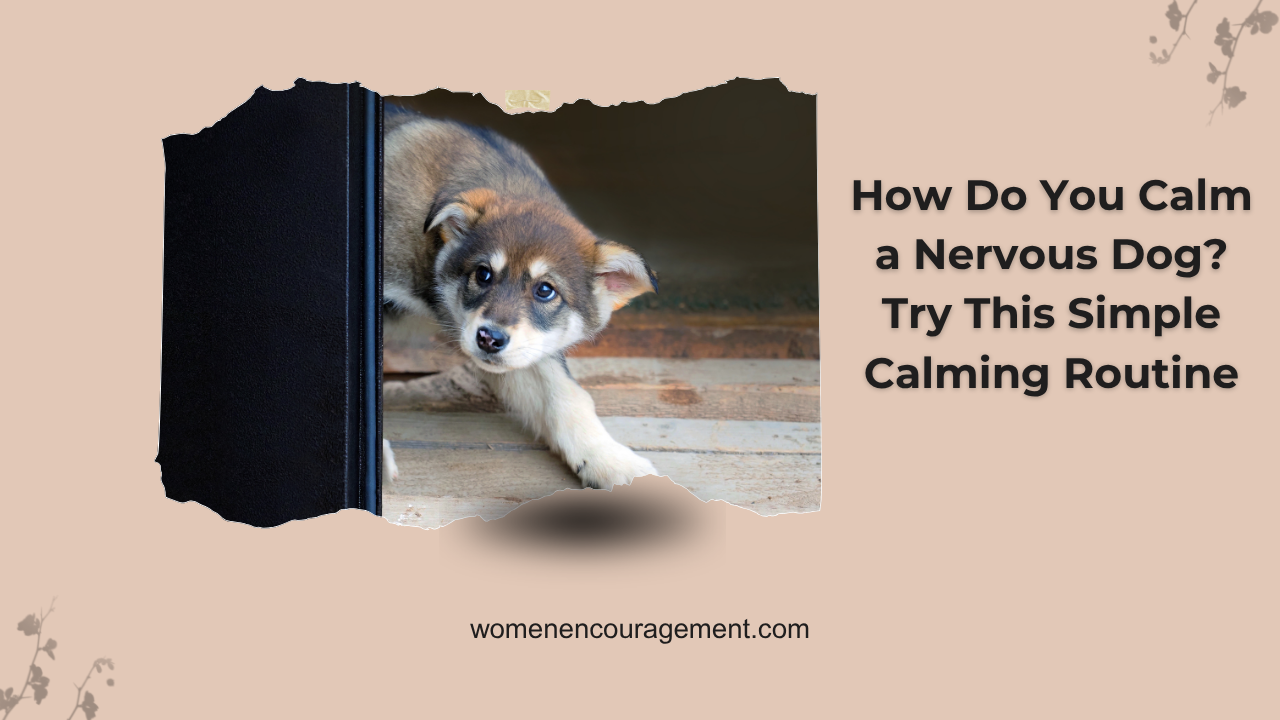
Nervous Dog
Some dogs hear thunder and barely lift an eyebrow. Other dogs hear one tiny rumble and assume the sky is throwing furniture.
My toy Pomeranian, Polly Pocket, may be small, but her opinions about suspicious noises are approximately the size of Texas.
Dogs can become nervous during thunderstorms, fireworks, car rides, separation, household changes, or visits from unfamiliar people. You may notice trembling, panting, pacing, hiding, barking, drooling, or attempts to escape.
You cannot explain to your dog that the storm will pass. However, you can create a predictable calming routine that helps your dog feel safer.

The Nervous Dog Plan
1. Begin Before Your Dog Is Panicking
A calming routine works best when it begins at the first sign of nervousness—or even before the stressful event starts.
If storms are predicted, prepare the room and gather your supplies early. Do not wait until your dog is running through the house like a fuzzy emergency siren.
Watch for early signs such as:
- Pacing or following you closely
- Ears held back
- Lip licking or yawning
- Trembling
- Panting when it is not hot
- Looking for somewhere to hide
- Refusing treats

Fear, anxiety, and noise phobias can produce overlapping behaviors. Severe noise phobia may cause panic or escape attempts, according to the Merck Veterinary Manual.
2. Create a Comfortable Safe Space
Choose a quiet interior room, covered crate, closet, or familiar corner where your dog already likes to rest.
Add a few comforting items:
- A favorite bed or blanket
- A familiar toy
- Fresh water
- A fan or white-noise machine
- Soft music
- Closed curtains to reduce flashes of lightning
Allow your dog to enter and leave the space freely. Never force a frightened dog into a crate or pull one out of a hiding place unless the location is unsafe.
The goal is to give your dog a retreat—not put her in puppy jail for having feelings. Polly’s favorite calm spot is behind a toilet. Sigh.
3. Stay Calm and Keep Things Predictable
The nervous dog pays close attention to our voices, movements, and routines. Sit nearby if your dog wants company. Speak normally and move calmly.
It is fine to offer quiet reassurance. You do not have to ignore a frightened dog to keep from “rewarding” fear. Fear is an emotional response, not a trick your dog performs to earn extra snuggles.
Avoid yelling, scolding, or physically correcting nervous behavior. Punishment can increase fear and make the next stressful event even harder.
4. Offer a Calming Activity
If your nervous dog is willing to eat, try a familiar chew, food puzzle, or lick mat. Sometimes a kong filled with frozen chunky peanut butter does a nice job (just trying to help).
Licking, sniffing, and chewing can give a mildly nervous dog something else to do. A favorite treat may also help your dog form a more positive association with distant noises.
Do not force food on a dog that is too frightened to eat. Polly Pocket turning down a snack would be my signal that we have officially entered serious territory.

5. Consider a ThunderShirt or Other Pressure Wrap
A nervous dog may benefit from a ThunderShirt—or what many people call a thunder vest—is a snug garment designed to provide gentle, steady pressure around a dog’s body.
Some dogs appear more settled while wearing one. Other dogs show little improvement. Research on pressure wraps is still limited, so think of the vest as one possible tool rather than a guaranteed cure.
For the best experience:
- Introduce the vest when your dog is already calm.
- Pair it with treats and praise.
- Make sure it is snug but not restrictive.
- Follow the manufacturer’s fitting instructions.
- Supervise your dog while it is being worn.
- Remove it if your dog becomes hotter, more agitated, or uncomfortable.
Do not wait until the loudest thunderclap in recorded history to introduce a strange new outfit. Let your dog investigate and wear it briefly on an ordinary day first.
A word of caution: don’t keep a dog in the thunder vest for hours on end, unless completely necessary. If pressure vests are worn too long, they can lose their effectiveness. Error on the side of caution with the duration of wearing pressure garments for nervous dogs.

6. Be Conservative With Aromatic Products
A nervous dog might enjoy a pet-formulated aromatic product may be one optional part of your dog’s routine, but essential oils should not be presented as a treatment for canine anxiety.
Concentrated essential oils can harm pets if they are swallowed, spilled on the coat, or applied incorrectly. The ASPCA Animal Poison Control Center recommends avoiding the direct application of concentrated essential oils to pets.
If you are considering a Young Living Animal Scents product:
- Ask your veterinarian whether it is appropriate for your dog.
- Follow the current product label exactly.
- Never substitute a homemade recipe for veterinary treatment.
- Keep bottles and diffusers out of reach.
- Use aromatic products in a ventilated area.
- Make sure your dog can leave the area.
- Stop using the product if your dog appears uncomfortable.
Extra caution is needed around cats, birds, very young animals, older pets, and animals with breathing problems or other medical conditions.
Natural does not automatically mean harmless. Poison ivy is natural, too, and nobody is inviting it to spa night.
I use Pet Scents T Away and love it for Polly. This combined with the Thunder Vest helps immensely. She doesn’t have nervous poops. #progress
7. Practice the Routine on Calm Days
Do not reserve the safe space, calming music, vest, and special chew only for frightening events. A nervous dog will appreciate a practice round.
Practice the routine when the house is peaceful. This helps your nervous dog connect those items with rest and good experiences instead of thinking, “Oh no. Mom brought out the special blanket. The world must be ending.”
Dogs with ongoing fears may benefit from gradual desensitization and counterconditioning. This work should happen slowly and, ideally, with guidance from a veterinarian or qualified reward-based behavior professional.
When Should You Call Your Veterinarian?
Schedule a veterinary appointment if your dog’s nervous behavior:
- Begins suddenly
- Is becoming more intense
- Causes destructive escape attempts
- Includes aggression or self-injury
- Prevents eating, sleeping, or normal activity
- Does not improve with basic environmental support

Pain and medical problems can sometimes cause behavioral changes. A veterinarian can rule those out and discuss behavior therapy, medication, or a referral to a veterinary behavior specialist.
Medication is not a failure. For a dog experiencing true panic, it may be the most compassionate part of the plan.

Your Nervous Dog’s Calming Routine
Every dog is different. Your routine might include:
- Starting before the stressful event
- Moving to a familiar safe space
- Closing the curtains and reducing noise
- Offering a favorite chew or lick mat
- Putting on a properly fitted pressure vest
- Using only veterinarian-approved, pet-formulated aromatic products
- Staying nearby and behaving calmly
- Contacting your veterinarian when your dog needs more support
The goal is not to create a dog who never feels nervous. It is to give your dog consistent signals that say, “You are safe, and I am here.”
Even if your dog is six pounds of fluff who believes she is personally responsible for protecting the entire neighborhood.
Download the Free Calm Dog Routine Checklist

Do not wait for the next storm to remember what worked.
Download my free Calm Dog Routine Checklist and keep your dog’s safe-space plan, favorite calming tools, veterinary information, and storm supplies together in one convenient place.
Curious about Young Living’s pet-formulated products? Send me a message. I’ll help you find the current product information and questions to discuss with your veterinarian—without pretending one bottle can magically solve every problem.
For more about pets, check out THIS POST, for DIY stain remover.
This article is for educational purposes only. It is not intended to diagnose or treat an animal or replace advice from your veterinarian. Contact your veterinarian or an animal poison-control service if you believe your pet has been exposed to a potentially harmful substance.

