Why Have I Lost My Motivation and Energy? And Ways to Rebound Naturally
Energy? Lacking. Motivation? Far gone. Here are Simple Ways to Support Your Body and Mind When You Feel Stuck
Energy and Motivation? Say what?!?? Have you ever looked at your to-do list and thought: “I know what I should do… I just don’t have the energy to do it.” You aren’t alone.
One of the most common struggles I hear from women over 40 is this: “I don’t feel like myself anymore.” They aren’t unmotivated, lacking discipline, and they aren’t lazy either. Typically, women our age are just exhausted. There is a huge difference!
Many women spend years carrying:
careers
children
aging parents
financial responsibilities
household management
emotional labor
hormone changes
chronic stress
relationships
Eventually the tank starts running low. The scary part? Many women assume they simply need to try harder. But often the issue isn’t motivation. It’s depletion.
Motivation and Energy Are Not the Same Thing
This may surprise you. Most people think motivation comes first. In reality, energy often comes first.
When you’re:
exhausted
overwhelmed
stressed
under-slept
emotionally drained
it’s difficult to feel motivated. Imagine trying to drive a car with no gas in the tank. That’s what many women are doing every day. They’re trying to create momentum from an empty tank. No wonder they feel stuck.
Common Reasons Women Lose Motivation After 40
There can be many reasons, including:
chronic stress
poor sleep
hormone fluctuations
decision fatigue
burnout
lack of movement
dehydration
blood sugar swings
emotional exhaustion
information overload
Sometimes what feels like laziness is actually exhaustion. And exhaustion deserves support, not shame.
5 Natural Ways to Support Motivation and Energy
1. Stop Trying to Do Everything
Many women are carrying enough responsibility for three people.
One of the quickest ways to feel defeated is trying to tackle everything at once.
Instead ask:
“What is the next right thing?”
Not:
next 20 things
next 50 things
Just the next thing.
Small wins build momentum.
2. Move Before You Feel Like It
This sounds backward. But waiting to feel motivated often doesn’t work. Movement creates momentum. I’ve started taking evening walks and it has increased my energy level exponentially. (Thank God!)
Try:
a 10-minute walk
stretching
dancing to one song
a quick workout
The goal is not perfection. The goal is movement. Action often creates motivation.
3. Eat for Energy
Many women accidentally fuel exhaustion.
Examples:
coffee only
sugary breakfasts
skipping meals
grabbing processed snacks
Instead focus on:
protein
healthy fats
fruits
vegetables
hydration
Your body needs fuel.
4. Reduce Decision Fatigue
One reason I love systems is because they reduce mental clutter.
Simple systems may include:
meal planning
weekly schedules
morning routines
evening routines
checklists
Every decision you eliminate frees up mental energy. And mental energy matters.
5. Celebrate Progress
Many women are accomplishing amazing things but only focus on what’s left undone. Try ending each day by writing:
Three things I did well today.
That’s it.
Momentum grows when we notice progress.
Wellness Tools I Personally Enjoy
As part of my wellness routine, I enjoy combining healthy lifestyle habits with supportive wellness products.
These products are not intended to diagnose, treat, cure, or prevent disease.
Many people enjoy NingXia Nitro as part of their morning routine when they need a little extra support for busy days.
The Real Secret to Motivation
The truth is:
Most women don’t need more pressure. They need more support with extra grace and nurturing. Females like us tend to be so tough on ourselves. Self care, patience, and support go a very long way.
More:
sleep
hydration
nourishment
movement
grace
healthy boundaries
Less:
guilt
perfectionism
comparison
overwhelm
Motivation is often a byproduct of feeling better. When your body has what it needs, showing up becomes easier.
Final Thoughts
Friend, if you’ve been feeling stuck lately, please know this:
We sure aren’t lazy. We just might need to sleep a few more minutes in the morning, or squeeze in some self care here or there.
My counselor has been telling me to say out loud to myself, “I am taking good care of you by eating this,” etc. By stating it out loud, I’ve noticed there is much more intention behind my actions.
Try it. you might like it.
Conclusion Recap:
You may simply be carrying more than anyone realizes.
Start small. Drink the water. Take the walk. Celebrate the win, no matter how small it might be. Build one simple habit at a time. Tiny steps create momentum. And momentum creates change. For more about Women’s Health, check out this post.
Mineral support may help support hydration and overall wellness habits. I know this is needed, I personally can’t stand the taste. I try to rub it on my feet. (Trying to be a good friend and share).
Many people prioritize healthy evening routines and sleep-support habits as part of overall wellness support. I put this in my diffuser or rub it on my feet before bed, it is phenomenal! Hey, it’s safe for the kiddos too.
Final Thoughts
If you’ve been feeling exhausted lately…
please know you are NOT alone.
Many women are carrying:
stress
emotional overload
hormone shifts
poor recovery
nervous system exhaustion
for years without realizing how much it impacts the body.
If you’d like my simple Wellness Guide for overwhelmed women over 40, Click HERE to download it and get started on a brand new path of greater wellness – naturally!
Tech Neck? Why So Many Women Over 40 Feel Tight, Hunched, and Stiff — and Simple Ways to Support Your Body Naturally
Ever catch yourself looking down at your phone and suddenly realize your neck feels like concrete? This is tech neck.
Between:
phones
laptops
stress
driving
working from home
endless scrolling
carrying the mental load of life
Many women are unknowingly spending HOURS every day with their shoulders rounded forward and their heads tilted down.
What many people call “tech neck” has become incredibly common — especially for overwhelmed women balancing work, family, stress, and constant screen time.
Common symptoms may include:
neck tightness
shoulder tension
headaches
upper back stiffness
poor posture
jaw tension
reduced mobility
feeling “hunched over”
muscle fatigue
Stress often settles in the body physically in the form of tech neck…
What Causes Tech Neck?
When the head repeatedly leans forward for long periods of time, extra strain can be placed on:
the neck
upper back
shoulders
spine
Over time, poor posture habits may contribute to:
muscle tightness
stiffness
rounded shoulders
discomfort
tension headaches
The good news?
Small daily habits can make a BIG difference over time.
3 Simple Movements to Support Better Posture
These gentle movements may help support mobility, posture awareness, and reduced tension.
1. Doorway Chest Stretch
This stretch helps open tight chest muscles that may pull the shoulders forward.
How to do it:
Stand in a doorway
Place forearms on each side of the frame
Step forward gently
Hold for 20–30 seconds
Breathe deeply
This can feel AMAZING after long hours on screens.
2. Chin Tucks
This simple movement may help strengthen muscles that support better neck alignment.
How to do it:
Sit or stand tall
Gently pull your chin straight backward
Think “double chin” motion
Hold for 3–5 seconds
Repeat 10 times
This helps counteract the forward-head posture many of us develop while using phones.
3. Wall Angels
This movement may help support upper back mobility and posture awareness.
How to do it:
Stand with your back against a wall
Keep arms bent at 90 degrees
Slowly raise and lower arms like making a snow angel
Move slowly and gently
Focus on posture — not perfection.
Quick Posture Tips for Everyday Life
Small changes matter.
Try:
raising your phone closer to eye level
taking stretch breaks every hour
rolling shoulders backward regularly
supporting your lower back while sitting
walking daily
strengthening your upper back muscles
reducing prolonged screen hunching
Your body was designed to MOVE.
What About the “Hunchback” Feeling?
Many women notice:
rounded shoulders
upper back tightness
stiffness between the shoulder blades
feeling collapsed forward
This is often connected to:
prolonged sitting
weak upper back muscles
tight chest muscles
stress posture
screen habits
Movement, stretching, posture awareness, and strengthening exercises may all help support healthier posture over time.
And honestly? Being kinder to your body matters too.
Most women are carrying WAY more stress than they realize.
Wellness Support I Personally Love for Tight Muscles & Tension
As part of my own wellness routine, I enjoy incorporating plant-based wellness products alongside stretching, movement, hydration, and stress support habits.
These products are not intended to diagnose, treat, cure, or prevent disease.
Deep Relief Roll-On is a portable roll-on blend many people enjoy applying after long workdays, exercise, or periods of physical tension.
It contains cooling and soothing essential oils often used as part of wellness-focused self-care routines.
Deep Relief has helped me so many times in a pinch. Sinus headaches have been relieved by dabbing this over my eye that hurts. I also have used this for tech neck, especially at the sides of my neck down by my shoulders. Instant comfort!
I love this roller ball because it fits anywhere: my car, my pockets, my purse, in the diaper bag. This small but mighty oil blend kicks tension’s butt.
Ortho Ease Massage Oil is often used during massage or relaxation routines to help create a calming self-care experience for tired muscles and tension areas.
Many people enjoy combining massage, stretching, hydration, and movement together as part of a holistic wellness routine.
I used this every day while I was going through a high conflict divorce. This was the ONLY thing I found that relieved my severe tension headaches. It is great stuff!
The Bigger Issue Most Women Ignore
Sometimes “tech neck” is not JUST about posture.
It’s about:
stress
tension
overwhelm
sitting too long
carrying emotional weight physically
The body keeps score.
And many women are carrying life in their shoulders.
That’s why gentle support matters:
stretching
breathing
movement
rest
hydration
nervous system support
simple wellness habits
Not punishment. Support. For a post about relieving tension naturally, check this out, CLICK HERE.
Final Thoughts
If your neck feels tight… your shoulders feel heavy… and your posture feels permanently stuck in “tired mom mode”…
Small consistent habits truly add up.
And sometimes the most powerful thing we can do is simply slow down long enough to care for the body we’ve been pushing so hard.
The Truth About Stress, Hormones, Inflammation, and Supporting Your Body Naturally
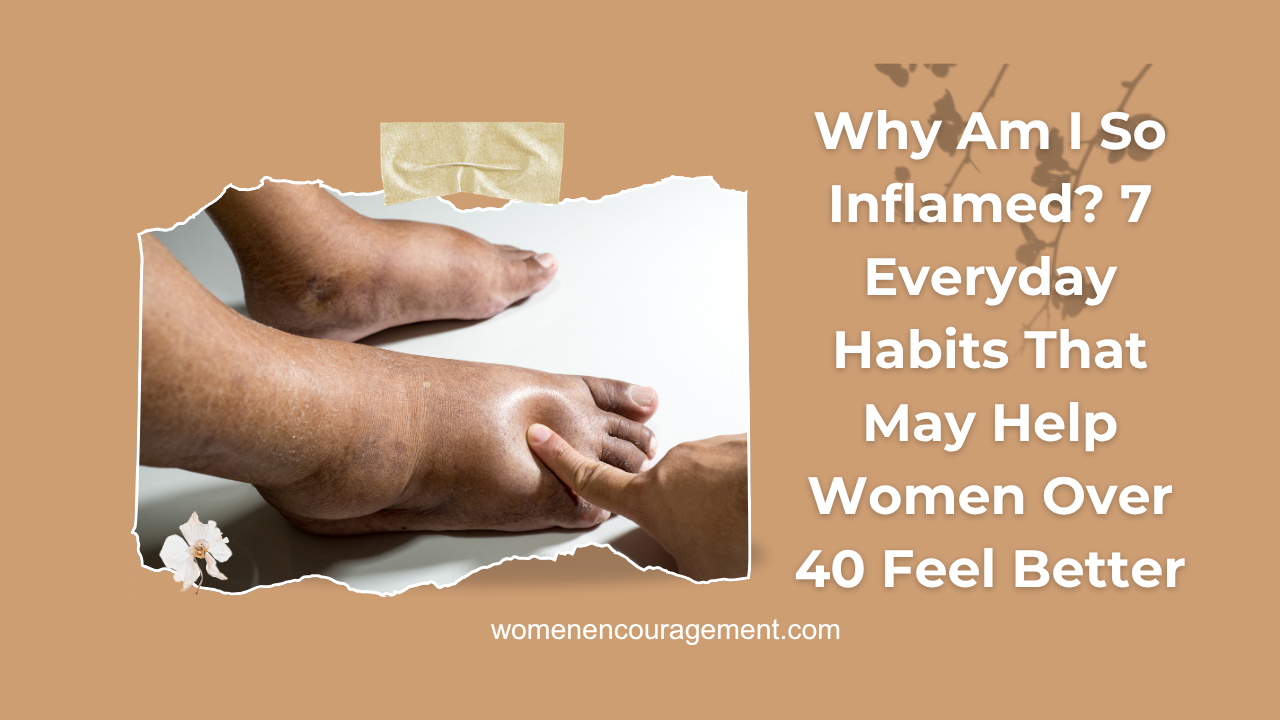
Puffy? Exhausted? and Stuck? Does that describe you? Have you ever looked in the mirror and thought:
“Why do I feel SO swollen, exhausted, and uncomfortable in my own body lately?”
Not just tired.
Heavy. Puffy. Inflamed. Overwhelmed. It doesn’t look healthy. It shows a deeper of issue of unhealth.
Like your body is waving a tiny white flag while you continue pushing through life on caffeine and survival mode.
If that sounds familiar… you are NOT alone.
Many women over 40 notice:
stubborn belly fat – puffy
bloating – puffy
low energy – exhausted and stuck
brain fog – exhausted
poor sleep – exhausted and stuck
hormone changes
water retention
inflammation
sluggish digestion – puffy
feeling “off” no matter what they try
Most women blame themselves. Haven’t we all had thoughts like, “I must be doing it wrong?” We try to exercise and eat well, but we still are puffy, exhausted, and stuck.
Why Women Over 40 Often Feel “Stuck, and Puffy, and Exhausted.”
After 40, several things start shifting at once:
hormones fluctuate
muscle mass naturally declines
stress often increases
sleep quality changes
metabolism slows
inflammation can rise
digestion may become sluggish
What a negative list, but there is hope!
Add modern life on top of that:
processed foods
chronic stress
emotional overload
poor hydration
sitting too much
constant rushing
…and many women begin feeling physically and emotionally weighed down (i.e. puffy, exhausted, and stuck). Sadly, the body keeps score.
The Liver’s Role in Overall Wellness
The liver is one of the hardest-working organs in the body. It is our strainer. The liver cleanses.
It helps process:
hormones
nutrients
medications
alcohol
waste products
metabolic byproducts
Your liver is already designed to naturally support the body’s detoxification processes. But healthy daily habits can help support the liver and overall wellness.
This is why many wellness experts focus on:
hydration
nutrition
movement
stress reduction
sleep
digestion
reducing processed foods
rather than extreme “detoxes” or crash cleanses.
Signs Your Body May Need More Support
Feeling tired or bloated does NOT automatically mean something is wrong with your liver.
But many women dealing with chronic stress and metabolic overload may notice:
puffiness
sluggishness
fatigue
bloating
digestive discomfort
low motivation
brain fog
water retention
feeling inflamed
stubborn weight gain
These symptoms can be summed up with: puffy, exhausted, and stuck.
These symptoms can have MANY causes, including:
stress
hormone shifts
poor sleep
insulin resistance
inflammation
digestive imbalance
burnout
That’s why supporting the body holistically matters.
What Is the Lymphatic System?
One area many women are suddenly hearing about is the lymphatic system.
The lymphatic system helps support:
fluid balance
immune function
circulation
movement of lymph fluid throughout the body
Unlike the circulatory system, the lymphatic system does not have a pump like the heart.
Movement helps it move.
That’s one reason why habits like:
walking
stretching
hydration
deep breathing
exercise
massage
may help support healthy lymphatic flow.
What Is Lymphatic Massage?
Lymphatic massage is a gentle massage technique designed to encourage movement of lymph fluid throughout the body.
Some people report benefits like:
reduced puffiness
temporary reduction in water retention
relaxation
less heaviness
feeling lighter and refreshed
Many women enjoy lymphatic massage as part of a broader wellness routine focused on:
I also use movement to help my lymphatic system. My son gave me this amazing Vibration plate. It is fun. My thighs actually burn after 10 minutes on it as if I went on a difficult run.
Wellness Habits That May Support the Body Naturally
Most women do NOT need a dramatic cleanse.
Most women need:
consistency
nourishment
hydration
sleep
stress support
movement
gentler wellness habits
Here are a few simple ways many women support overall wellness naturally:
1. Increase Hydration
Hydration supports:
digestion
circulation
energy
bowel regularity
normal detoxification processes
Many women are walking around chronically dehydrated without realizing it.
2. Prioritize Protein and Fiber
Protein and fiber may support:
blood sugar balance
metabolism
digestion
fullness
energy levels
Think:
berries
vegetables
lean proteins
chia seeds
flaxseed
oats
3. Move Your Body Daily
Walking and strength training support:
circulation
metabolism
lymphatic movement
muscle health
stress reduction
Even short walks matter.
4. Support Stress Levels
Chronic stress impacts:
hormones
digestion
inflammation
sleep
cortisol levels
overall wellness
Your nervous system matters more than most people realize.
Wellness Products I Personally Explored
As part of my own wellness journey, I started paying closer attention to products that support digestion, hydration, antioxidants, and overall wellness.
These products are not intended to diagnose, treat, cure, or prevent disease, but many people enjoy incorporating them into healthy lifestyle routines.
JuvaCleanse Vitality is an essential oil blend often used by people interested in supporting healthy lifestyle habits and overall wellness routines. Many people incorporate it into wellness practices focused on digestion, hydration, and daily wellness support.
wellness support
part of hydration routines
mindful wellness habits
overall lifestyle support
You could talk about adding it to water as part of a:
The Cleansing Trio Kit is designed to support individuals who want to focus on healthy habits, mindful eating, hydration, and overall wellness support as part of a balanced lifestyle.
LiverTone is a supplement blend designed to support overall wellness and healthy liver-support habits as part of a healthy lifestyle.
Since the liver plays an important role in processing hormones, nutrients, and metabolic byproducts, many wellness-focused individuals prioritize habits that support healthy liver function naturally.
supporting healthy lifestyle habits
supporting overall wellness
part of a wellness-support routine
Since the liver plays a role in:
hormone processing
metabolism
digestion
processing metabolic byproducts
many women interested in wellness routines gravitate toward liver-support products.
The Bigger Problem Nobody Talks About
Women over 40 are carrying A LOT.
Physically. Mentally. Emotionally.
Most women are:
overstressed
underslept
overworked
emotionally exhausted
trying to care for everyone else first
And eventually the body starts asking for support.
Not punishment. Not another crash diet. Not shame.
Support.
Final Thoughts
If you’ve been feeling:
puffy
exhausted
inflamed
overwhelmed
stuck in your body
please know this: Small daily habits truly do add up over time.
Years ago, I traveled to Haiti for a wedding with mission’s work.
At first, everything seemed normal. The chicken at the wedding looked amazing. Chicken. Beans. Rice. What could go wrong?
Then the bubble guts hit. I needed to use the bathroom asap, but there were no toilets. So the cane field it was, ew. Unfortunately, it didn’t “stop” there.
Let’s just say the flight home was as close to hell as I pray I will ever be. The bathrooms on the airplane from Haiti to Miami were not working. Let’s just say, I clinched my booty at an unknown to me level – ha! It was awful.
What followed was one of the hardest health seasons I’ve ever experienced.
For weeks:
I struggled with diarrhea after eating.
My digestion felt completely off: tons of cramping and running for the restroom.
I had zero energy.
Weight was literally falling off of me.
Eventually, I lost 22 pounds before I finally got help.
Twenty Two whole pounds. My weight was less than 100 pounds. I looked… sick! People accused me of having an eating disorder. Eventually, I contacted my doctor.
At the time, I honestly didn’t know much about gut health, digestive infections, parasites, or how severely travel-related illness can impact the body. I thought I might have a stomach flu.
The doctor sent my poo for tests and they took my blood. Sure enough. Parasites. I was put on antibiotics and stomach tranquilizers. I often wonder if they could still be there?
That experience changed the way I think about health forever. I am forever thankful for American medicine. Very quickly, I regained strength and the ability to eat without needing to use the latrine so violently after.
Check Yourself
Now before we go full internet conspiracy mode here…
Not every digestive issue is parasites. Not every bloated stomach means something serious. And TikTok is currently blaming parasites for approximately 97% of humanity’s problems.
But the truth of the matter is this:
Digestive health matters FAR more than most people realize.
Could You Have Parasites?
Let’s talk about the elephant on social media right now: parasites.
Parasite cleanses, detox videos, “signs you have parasites” reels… they are EVERYWHERE lately.
And honestly? Some of the conversation online is helpful. Some of it is wildly exaggerated.
These products are not intended to diagnose, treat, cure, or prevent disease, but many people enjoy incorporating digestive-support products into their routines.
Wellness Tools I Personally Explored for Digestive Support – whether there are parasites or not
After my experience with severe digestive issues, I started paying much closer attention to supporting my gut and overall wellness naturally.
While these products are not intended to diagnose, treat, cure, or prevent disease, here are a few wellness-support tools I personally explored as part of a broader healthy lifestyle.
ParaFree is an herbal supplement blend designed to support overall digestive wellness and healthy cleansing support. It contains herbs traditionally used in wellness practices to support digestive balance and gastrointestinal health.
Version 1.0.0
People often include herbal blends like this as part of a broader focus on:
ComforTone is designed to support healthy digestion and bowel regularity. It contains a blend of herbs and fiber-support ingredients commonly used to promote healthy elimination and digestive comfort.
Many people focus on digestive regularity because sluggish digestion can sometimes contribute to:
bloating
discomfort
feeling sluggish
digestive irregularity
Digestive wellness is often about supporting the body’s natural processes consistently over time rather than looking for “quick fixes.”
Probiotics are beneficial bacteria that help support a healthy gut microbiome.
The gut microbiome plays a role in:
digestion
immune function
nutrient absorption
gut balance
overall wellness
Many people choose probiotics after:
antibiotic use
digestive upset
travel
periods of poor nutrition
ongoing digestive stress
A healthy gut microbiome may support overall digestive balance and wellness. Here’s some extra head knowledge:
Gut Microbiota: Strains like L. acidophilus and B. lactis are commonly used in research to help alter or restore gut microbiota composition. Gastrointestinal Support: Bifidobacterium and Lactobacillus species are heavily studied for their capacity to survive gastric acid and exert beneficial effects on intestinal flora, making them common adjuncts for antibiotic therapy Immune Function: Several studies have linked probiotic supplementation to modest improvements in humoral immunity and overall gut barrier function.
National Institutes of Health (.gov)
Life 9 Delivery and Efficacy For a probiotic to be effective, the live bacteria must survive the highly acidic environment of the stomach to reach the colon. Young Living incorporates targeted-release HPMC capsules and a specific desiccant bottle to protect the cultures from moisture and stomach acid.
Hydration sounds simple… but honestly, many people are walking around chronically dehydrated.
Water supports:
digestion
bowel regularity
nutrient transport
energy levels
healthy detoxification processes
Sometimes foundational habits matter more than dramatic wellness trends.
Increasing hydration was one of the simplest but most helpful changes I personally focused on during my wellness journey.
The Bigger Conversation Nobody Is Having
Sometimes we focus SO much on:
calories
motivation
discipline
willpower
…but ignore the fact that the body may simply be overwhelmed.
Women are tired.
Burned out.
Stressed.
Inflamed.
Running on caffeine and survival mode.
And many women ignore digestive symptoms far too long because they are busy taking care of everyone else first.
I know I did.
Final Thoughtson Parasites and the Gut
Could parasites be part of SOME people’s health struggles? Possibly. (Especially if you own pets and they sleep with you).
References (APA 7th Edition)
Chomel, B. B., & Sun, B. (2011). Zoonoses in the bedroom. Emerging Infectious Diseases, 17(2), 167–172. https://doi.org/10.3201/eid1702.101070 Cited by: 303
Zanen, L. A., Kusters, J. G., & Overgaauw, P. A. M. (2022). Zoonotic risks of sleeping with pets. Pathogens, 11(10), 1149. https://doi.org/10.3390/pathogens11101149 Cited by: 21
If you do have pets, look into using Paragize Essential Oil blend for pets. Part of Young Living’s Pet Scents Line.
Finally, the biggest take away is to take care of ourselves. All the stress, symptoms, dietary habits, etc. – it all matters.
Belly Fat. Let’s start off with the obvious, this is not fun to talk about. However, there is hope!
The negative is that somewhere after 40, many women notice:
Weight suddenly settling around the middle
Cravings increasing
Energy dropping
Lack of sleep affecting everything
Stress showing up directly on their waistline
Meanwhile, the old tricks stop working.
Less food? Exhausting. And so constraining. More cardio? Barely moves the needle. And the boobs sweat so much more at this point or is it just me?
One cookie? Apparently this adds like ten pounds.
Am I the only one?
The truth of the matter is this:
Belly fat after 40 is often connected to much more than calories. This is actually a hopeful fact.
Our bodies are changing.
And no, we are not imagining it. If only we were imagining it, and we were somehow actually skinny.
Why Belly Fat After 40 Happens
There are several major shifts happening in the body after 40, especially during peri-menopause and post-menopause.
1. Hormonal Shifts
As estrogen changes, many women notice:
More weight around the midsection (sadness). It’s the great widening.
Increased cravings.
Changes in sleep.
Mood fluctuations.
Slower recovery.
This is incredibly common. It’s such a negative list. Ugh.
2. Stress & Cortisol
Stress affects far more than emotions.
Chronic stress can impact:
Sleep quality.
Hunger signals.
Cravings.
Blood sugar.
Fat storage. (Insert cuss words).
Especially around the belly. Good ole belly fat. Typing all this hurts my heart. Unfortunately, for me this has been reality.
Many women are carrying an unbelievable mental load right now. This affects how our bodies, mostly our stomach’s look. The belly fat seems to expand quicker than fresh bread in the oven.
3. Muscle Loss
After 40, women naturally begin losing muscle mass.
That matters because muscle helps support:
Metabolism
Insulin sensitivity
Strength
Energy use
This is one reason endless cardio often becomes frustrating. From what I understand, the intense cardio further stresses the body, causing more belly fat.
4. Blood Sugar Swings
This one is huge.
If blood sugar constantly spikes and crashes, many women notice:
Afternoon crashes
Sugar cravings
Increased hunger
Energy instability
Easier fat storage
Especially around the waist. Belly fat.
What Research Shows
Research suggests that post-menopausal women often experience:
Increased abdominal fat storage. Belly Fat. Duh.
Greater insulin resistance tendencies. Agony.
Reduced muscle mass. Hello flab where it’s never been before.
Greater sensitivity to stress and poor sleep. You think?
Research also shows that:
Poor sleep can increase hunger hormones
Chronic stress can influence eating patterns and fat storage
Strength training becomes increasingly important with age
Which means your body may need a different strategy now than it did at 25. (Captain Obvious).
I feel like after I turned 40, I could look at food and need to unbutton my jeans. Anybody else?
What Actually Helps – Finally, This is Where This Post Becomes Happy… 😁
First: we will not be starving ourselves (I tried, I still had my tummy fat blossoming).
Second: we will not be shaming ourselves because it doesn’t help either.
Third, we will not surviving on tiny salads while thinking about bread constantly. (This sounds like hell).
Um, I drink this every single day. My body craves this.
I think many women underestimate how often cravings are connected to:
Fatigue
Stress
Running on fumes
For me, supporting energy helps me make better choices overall. Also, Ningxia Red helps me win over sugar cravings. What’s wild is there is hardly any sugar in Ningxia Red, but my body loves this drink!
Final Thought
Our bodies are responding to
Hormonal changes
Stress
Sleep disruption
Blood sugar instability
Lifestyle overload
And the good news is:
Small changes really can add up over time.
Want My “Flat Belly After 40” Starter Guide?
I created a simple guide for overwhelmed women who want realistic wellness support without extreme diets.
Now let’s go shrink: eat protein and list weights. How did it get to this – ha!! Reach out with any questions.
Talk Soon,
Jenn
Here is a glossary of terms, just to help a friend out.
Belly Fat Over 40 Glossary of Terms
Cortisol
Often called the “stress hormone.” Cortisol is made by your adrenal glands and helps your body respond to stress. Short bursts are normal. But when cortisol stays high for long periods of time from chronic stress, poor sleep, overworking, or emotional overwhelm, it may increase cravings, fatigue, and stubborn belly fat storage.
Insulin
Insulin is a hormone made by the pancreas. Its job is to move sugar (glucose) from your bloodstream into your cells for energy. Think of insulin like a key that unlocks your cells so your body can use fuel properly.
Insulin Resistance
Insulin resistance happens when your cells stop responding well to insulin. Your body then produces MORE insulin to compensate. Over time, this may lead to weight gain, fatigue, cravings, inflammation, and increased belly fat — especially around the midsection.
Type 2 Diabetes
A chronic condition where the body struggles to regulate blood sugar levels properly. It often develops after years of insulin resistance. Lifestyle habits like movement, sleep, nutrition, and stress management can play a major role in prevention and support.
Blood Sugar
Blood sugar refers to the amount of glucose in your bloodstream. Large spikes and crashes in blood sugar can affect energy, mood, cravings, hunger, and fat storage. Stable blood sugar often supports better energy and appetite control.
Weight Training
A form of exercise that uses resistance — like dumbbells, resistance bands, machines, or body weight — to build muscle strength. Weight training becomes especially important after 40 because muscle naturally declines with age. More muscle can support metabolism, strength, posture, and healthy aging.
Metabolism
Your metabolism is the process your body uses to turn food into energy. Factors like age, sleep, hormones, stress, muscle mass, and activity levels can all influence metabolic health.
Muscle Mass
The amount of muscle on your body. Muscle burns more energy than fat tissue, even at rest. Maintaining muscle after 40 can support strength, energy, balance, and metabolic health.
Menopause
Menopause is officially diagnosed after a woman has gone 12 consecutive months without a menstrual cycle. Hormonal shifts during this season can impact sleep, mood, weight distribution, energy, and metabolism.
Perimenopause
The transition phase leading up to menopause. This stage can begin years before menopause officially happens. Hormones may fluctuate wildly during perimenopause, leading to symptoms like fatigue, brain fog, mood swings, irregular cycles, sleep issues, and stubborn belly fat.
Postmenopause
The stage after menopause. Hormone levels stabilize at lower levels than during reproductive years. Many women continue focusing on muscle health, bone density, metabolism, and stress management during this phase.
Cycles
A woman’s menstrual cycle is the monthly hormonal rhythm that prepares the body for pregnancy. Hormonal changes throughout the cycle can influence energy, cravings, mood, sleep, and appetite.
Estrogen
A primary female hormone involved in reproductive health, metabolism, bone health, and more. Changes in estrogen levels during perimenopause and menopause may influence where the body stores fat — especially around the abdomen.
Progesterone
A hormone that works alongside estrogen. Progesterone supports mood, sleep, and reproductive health. Declining progesterone levels may contribute to irritability, sleep struggles, and feeling “off.”
Inflammation
Inflammation is the body’s natural response to injury or stress. Short-term inflammation helps healing. Chronic inflammation, however, may be linked to fatigue, weight gain, joint discomfort, and metabolic challenges.
Visceral Fat
This is fat stored deep around the organs in the abdominal area. Unlike fat under the skin, excess visceral fat is associated with increased health risks and metabolic concerns.
Cravings
Strong urges for certain foods — often sugar or processed carbohydrates. Cravings can sometimes be influenced by stress, blood sugar swings, poor sleep, hormones, or emotional overwhelm.
Sleep Deprivation
Not getting enough quality sleep. Poor sleep may affect hunger hormones, stress hormones, energy, metabolism, and decision-making around food.
Sedentary Lifestyle
A lifestyle with very little movement or physical activity. Long periods of sitting may negatively impact circulation, muscle health, metabolism, and energy levels over time.
Protein
An important nutrient that helps build muscle, repair tissue, and support fullness after meals. Adequate protein intake becomes increasingly important after 40 for maintaining strength and metabolic health.
Strength Training
Another term for resistance or weight training. Strength training helps build muscle, support joints, improve posture, and maintain independence as we age.
Hormones
Chemical messengers in the body that help regulate things like energy, mood, metabolism, appetite, sleep, and reproductive health. Hormonal changes can impact how women feel physically and emotionally after 40.
Adrenal Fatigue
A popular wellness term often used to describe extreme exhaustion, burnout, and stress overload. While not officially recognized as a medical diagnosis, many people use the term to describe feeling emotionally and physically depleted from chronic stress.
Gut Health
Refers to the health and balance of bacteria and digestion within the digestive system. Gut health may influence immunity, inflammation, mood, cravings, and overall wellness.
Lean Muscle
Muscle tissue without excess fat. Building lean muscle can support a toned appearance, strength, metabolism, and healthy aging.
Calorie Deficit
Consuming fewer calories than your body burns. This is often discussed in weight loss conversations, though hormone health, muscle mass, stress, and sleep also play important roles in body composition after 40.
Non-Scale Victories
Positive health changes that are NOT tied to body weight. Examples include better sleep, more energy, improved mood, fewer cravings, stronger workouts, or feeling more confident in your clothes.
“If I don’t eat something sweet right now, I may not survive.”
You try to resist by drinking water, then you distract yourself. But, open the pantry anyway.
Sound familiar?
The truth of the matter is…
This is not a willpower problem.
It is your body trying to tell you something.
Most women are blaming themselves for something that is actually biological.
What’s really going on?
Let’s keep this simple.
There are usually 4 big reasons you’re craving sugar all day:
1. Blood sugar rollercoaster
If your day looks like:
coffee
quick carbs
skipping meals
Your blood sugar goes:
⬆️ spike ⬇️ crash ⬆️ spike ⬇️ crash
And your body says:
“We need sugar NOW.”
2. You’re under-eating protein
Most moms are running on:
carbs
snacks
whatever is left on their kid’s plate
Protein helps stabilize energy.
Without it?
*cravings increase *energy drops
3. You’re exhausted
Research shows:
Poor sleep can increase hunger hormones and cravings
When your body is tired, it looks for:
*fast energy *aka sugar
4. Stress is running the show
Stress does not just live in your head.
It affects:
blood sugar
hormones
energy
And it often leads to:
*emotional eating *quick cravings *“I just need something” moments, or hours of bingeing. I’ve been there, especially late at night (not my best moments).
What research actually shows
Blood sugar swings are linked to increased hunger and cravings
Sleep deprivation can increase appetite and desire for high-calorie foods
Chronic stress is associated with increased snacking and sugar intake
Translation:
This is your body trying to keep up.
So what actually helps?
Not cutting sugar completely.
Or “being more disciplined.”
And absolutely not starting over every Monday.
You need:
Simple daily support that stabilizes your body
My simple craving support routine
This is what I personally focus on:
1. Protein first
Before coffee if possible.
Even something small helps.
Ideas: Look at Legendary protein products, spoon full of peanut butter, a perfect bar (first thing in the morning).
2. Don’t skip meals
I know. We all do it.
But it almost always backfires later.
PS I have friends getting Factor meals and the like to have meals ready at all times to fix this problem. This answer is currently out of my budget, but just sharing in case it will help you. =)
3. Move your body (just a little)
Even a 10-minute walk helps regulate blood sugar.
These gadgets are helping me do this, even when it rains:
Ningxia Red is what I crave currently. I drink it, and it puts a huge clamp on cravings. This also supports nine systems in the body. I will never be without my Ningxia Red, I pray.
Where it fits: daily energy + consistency
Let me be honest…
A lot of cravings aren’t just about sugar.
They’re about:
low energy
running on fumes
your body looking for a quick boost
That’s where I personally like adding something simple in the morning.
NingXia Red is a daily antioxidant drink made with wolfberry and other plant-based ingredients.
I don’t use it as a “fix.”
I use it as support for:
steady energy
daily nutrition
helping me not feel like I’m crashing by mid-afternoon (I drink it after lunch and sometimes in the morning as well).
And when your energy feels more stable… cravings tend to feel less intense. Winner!!
Tired? Let’s just say it out loud… You slept. Not perfectly. But enough. And yet…
You wake up tired
You hit a wall by 2pm
You feel like you need a nap just to survive dinner
What is going on??
So many mom friends wear “Tired,” like a badge of honor. In America, it feels like a pull to burn the candle at both ends. Hustle culture screams, “Jam, more into the day.”
Have you noticed this or is it just me? Busy is another bragging right. My take is that if we are constantly on, no matter why rested is a rare commodity.
The truth of the matter is…
You’re not broken, definitely not a slacker…
And no… you don’t just “need more sleep.”
Something much deeper may be going on.
Cough, cough: slow down. Read a book, rock in a rocking chair. Maybe even sip tea! Think of our grandparents and great grandparents generations. They weren’t stressed like this generation tends to be…
Why you feel tired even after sleeping (big possibility)…
Let’s keep this simple. There are usually 5 main reasons:
1. Your body never actually relaxed. You may have slept…
But your body stayed in stress mode all night. I think this one may just be an epidemic.
This is the “tired but wired” cycle, the kind where you never get into the restorative rest our bodies need.
Signs:
Waking between 2:00-4:00am to. pee
Waking to check your phone in the middle of the night, “Hello. Addiction?”
Rolling around, slightly sleeping, while actively focusing thoughts on a real life matter…
Research shows chronic stress can disrupt sleep quality —even if you’re technically asleep. Totally sucks. Been there, done that. Ugh.
2. Blood sugar swings. If your blood sugar is all over the place:
you crash mid-day
you feel shaky or foggy
your energy is unstable
This is HUGE for moms. Especially the ones who cram food in while driving, often do not get a whole meal, etc.
Let me just say with a son with Type 1 Diabetes, protein is our friend in this situation. Protein helps stabilize blood sugar.
3. Hormone shifts. Especially if you’re in:
your 30s
your 40s
or beyond
Hormones can affect:
sleep quality
energy
mood
Even subtle shifts can leave you feeling drained.
Signs like:
Acne
Night sweats
Painful cycles
Awful PMS
Weight gain or loss for no reason
Difficulty maintaining warmth
4. Poor sleep quality (not just quantity) – this is similar to the #1.
You can sleep 8 hour…but if it’s broken, light, or restless?
You wake up exhausted, sadly. According to sleep research, quality matters more than just hours.
A 2016 review published in the journal Sleep stated:
“Sleep quality may be just as important, if not more important, than sleep duration in predicting future health.”
5. No daily rhythm
Your body LOVES patterns. But most of us are:
skipping meals
staying up late
overstimulated all day
differing bed times and wake times
grazing throughout the day
No rhythm = no steady energy
Quick reality check (this matters)
Over 60% of women report ongoing fatigue
Sleep issues affect millions of adults regularly
Stress is one of the top contributors to poor energy
👉 You are not alone in this.
So what actually helps?
Not a 27-step routine. Not more supplements thrown at the problem.
You need: simple daily signals your body can recognize.
Start with THIS (simple shift)
Before you try to “fix your whole life”… Start with your evening. Because if your body never winds down… tomorrow will feel the same.
They aren’t a magic fix…. Just as a consistent cue, that, “We’re done for the day.”
3. Clear your brain
Write down:
your top 3 priorities for tomorrow
That’s it.
💡 Why this works
Your body responds to patterns.
When you repeat the same signals:
your brain learns to relax faster
your sleep improves
your energy improves
FAQ (quick answers)
Why am I tired even after 8 hours of sleep?
Because sleep quality, stress, and hormones matter more than just hours.
Can stress really make me this tired?
Yes. Chronic stress can impact sleep, energy, and mood.
Is this a hormone problem?
Sometimes. Especially in perimenopause or menopause.
Do I need supplements?
Not always.
Start with:
sleep
rhythm
stress support
Then layer in support if needed.
Will this fix everything overnight?
No.
But it will start shifting things in the right direction.
Essential Oils for Stress, Sleep & Feeling Tired. FAQs
Do essential oils actually help with stress and relaxation?
They can support relaxation as part of a routine.
Certain scents (like lavender) have been studied for their calming effects, and many people use essential oils as a sensory cue to help the body wind down.
👉 They’re not a treatment or cure 👉 But they can be a helpful tool alongside good habits
How do essential oils help you relax?
Your sense of smell is directly connected to the part of your brain that processes emotion and memory.
That means:
👉 when you pair a calming scent with a routine 👉 your brain starts to associate that scent with “time to relax”
Over time, this can help your body shift into a calmer state more easily.
Where should I apply essential oils for stress support?
You don’t need a brand new life to feel better. For goodness sake, make the most of the Beautiful, Loving Life you have been given. Savor each day because truly it is a gift. In addition to gratitude,
This is for general wellness support and is not medical advice.
Final Word of Encouragement
Friends, life can be fast moving! I still can’t believe most of my kids are adults.
Let’s take the time to really wind down at night. Take a bath. Read the book. Put on a fan (this helps me sleep so much). Fill the diffuser before turning off the lights.
Life is so much sweeter when we are rested. Joy fills my heart much more when I’m not battling fatigue.
Invest in our futures by getting proper rest. The best is yet to be together: you and me. We are stronger, together. Better: together.
Major Study on Sleep Regularity + Longer Life
A 2024 study published in the journal Sleep found that:
Sleep regularity was a stronger predictor of mortality risk than sleep duration.
In plain English:
People with more regular, higher-quality sleep patterns tended to live longer than people with irregular sleep schedules.
Stress Away? Stress: Let’s just call it what it is…
We finally sit down at night… and instead of relaxing…
Our brain is like:
“Hey. Now that you’re still… let’s replay everything you didn’t finish today.”
or
“Hey, let’s rethink every conversation from every angle.”
Cool. Love that for us.
The truth of the matter is…
We aren’t bad at relaxing,
We are just overloaded, over stimulated, over responsible.
All. Day. Long.
We are:
answering questions
solving problems
breaking up fights
remembering everything for everyone
and somehow still trying to drink water and be a kind human
It’s a lot.
So when the house gets quiet?
Our body is tired… but our brain is still clocked in. Sadly.
So what do we actually do about it?
Not a 27-step routine.
Not something you’ll quit in 2 days.
We’re doing a 5-minute evening routine for stressed moms that actually fits real life.
Messy life. Loud life. Mom life.
🌙 Your 5-Minute Reset (real life version)
1. Turn the world down (1 minute)
No big speech here.
Just:
turn off bright lights
put your phone on silent
stop the input
We are basically telling our brain:
“The show is over. Go home.”
2. Give your body a signal (1 minute)
Your body needs a cue that it’s safe to relax.
This is where I personally use Young Living Stress Away
Not because it’s magic.
But because it’s consistent.
roll it on wrists
smell it
take a slow breath
Done.
It becomes your brain’s little signal of:
“Oh… we’re winding down now.”
3. Fix your shoulders (because… yikes) (1–2 minutes)
Be honest…
Your shoulders are somewhere near your ears right now, aren’t they?
Try this:
roll them back slowly
stretch your neck side to side
unclench your jaw (this one gets me every time)
You’re not working out.
You’re just telling your body:
“You can let go now.”
4. Get tomorrow out of your head (1 minute)
THIS is the big one.
Grab anything — notebook, receipt, random paper.
Write down:
your top 3 priorities for tomorrow
Not 15.
Not your entire life plan.
Just 3.
Because your brain doesn’t need more pressure… it needs closure.
5. Finally, Sit like a normal human (30 seconds)
No phone.
No scrolling.
No “just one more thing.”
Just sit.
I know… groundbreaking.
But this is where your body actually catches up.
Awe, doesn’t this feel better?
Why this works (and why most routines don’t)
Because this isn’t about becoming a different person.
This is about giving your nervous system a pattern.
Same steps. Same order. Same signal.
After a few nights, your brain starts to recognize:
“Oh… this means we’re done.”
And THAT is when you finally start to relax at night as a mom.
Let’s talk about the oil real quick
You don’t need anything fancy to do this.
You really don’t.
But…
Scent is one of the fastest ways to calm your body.
That’s why I use Young Living Stress Away
Not as a miracle.
Just as a simple, repeatable cue.
And honestly?
As moms… we need simple. I used this oil in my mini mom mobile vents when the kids were all crying waiting in the drive through line. It’s a keeper!
If you’re overwhelmed right now…
Start tonight.
Not Monday. Not when life slows down (lol… right).
Tonight.
Even if you only do 2 steps.
Even if your kids interrupt you 3 times.
Even if it’s messy.
Progress over perfect. Always.
My tid bit: I don’t do this wind down routine anymore. Nope. I just put oils on my feet and in my diffuser, and that’s all she wrote: I am out – for the count.
Even with menopause, now post menopause – I sleep hard, and good!
Want this in a super simple cheat sheet?
Because I know you don’t want to remember all this at 9:47pm 🙂
I made a quick “Evening Reset” you can follow step-by-step.
Unwind at Bedtime. This can feel like the hardest part of the day. With four kids, I used to dread bed time because it included some of our worst behavior. That is, until I found an iron clad way to do without the chaos.
By evening, everyone is tired, overstimulated, and somehow still not ready to settle down. The lights are on, the energy is high, and your peaceful nighttime routine can start to feel more like wrestling caffeinated squirrels. If that sounds familiar, you are not doing anything wrong. Many families need simple, calming support to help the day come to a gentler close.
That is why Young Living KidScents Unwind has become one of those products many families keep nearby for evenings that feel extra busy. Young Living describes it as a supplement formulated for children to help promote a calm and relaxed state, reduce restlessness, and help with occasional sleeplessness. Its official product materials highlight L-theanine, 5-HTP, and magnesium, and say it is intended for children ages 4 and older.
And while it was designed for kids, I will tell you honestly that I have used it myself when I wake up in the night and cannot quite settle back down. For me, it has been one of those “lights out” supports that fits beautifully into a calm nighttime rhythm.
Why bedtime feels so hard sometimes
If you have ever wondered why bedtime can spiral so quickly, you are not alone. Kids carry a lot by the end of the day. School, activities, screens, emotions, noise, sugar, transitions, and plain old tiredness can all pile up. Even good days can end with wound-up energy.
That is why bedtime often needs more than one command to “go to sleep.” It usually works better when you create a rhythm that helps the body and mind slow down.
And that is where you become the hero of your home.
Not because you make bedtime perfect, but because you create calmer patterns. You notice what helps. You choose gentle tools. You build a nighttime routine that supports peace instead of pressure.
What is Young Living Unwind?
Young Living KidScents Unwind is a supplement in single-serve powder stick packs. Young Living says it is formulated to help promote a calm state, reduce restlessness, help with occasional sleeplessness, and support focus and mental clarity.
I originally bought it for those times when my kids have high anxiety and can’t seem to catch their breath. One of my kids completely loves this product, including the watermelon flavor. He says he can go to sleep after taking this.
The featured ingredients Young Living highlights are:
L-theanine
5-HTP
Magnesium
That makes it appealing for families who want a gentle bedtime support option that is not centered on melatonin.
What makes Young Living Unwind stand out?
What I like about Unwind is that it fits into a routine instead of trying to replace one. And it is not more pills! Yay!
It feels like a “help the evening go better” product, not a “force sleep now” product. That difference matters. A lot of moms are not looking for something harsh. They are looking for something that supports the kind of bedtime they are already trying to create: calmer lights, calmer voices, calmer bodies, calmer evenings.
Young Living positions Unwind for children ages 4+ and describes it as helping promote calm and relaxation while supporting occasional sleeplessness and restlessness.
That is exactly the kind of wording I think makes sense for bedtime content too. We are not talking about perfection. We are talking about support.
Young Living says L-theanine occurs naturally in green tea and helps promote relaxation while helping ease occasional irritability. The company also says it may support next-day focus and mental clarity.
5-HTP
According to Young Living’s product information, 5-HTP works synergistically with L-theanine to promote a calm state and assists in relieving occasional stress.
Magnesium
Young Living says magnesium is involved in hundreds of metabolic reactions in the body and may help support a sense of calm and help with occasional sleeplessness.
If bedtime has been feeling chaotic, Unwind does not have to be the whole plan. It can simply be one helpful part of it.
Think of it like this: you are not trying to win bedtime with one magic trick. You are building a softer landing at the end of the day.
That might include:
dimming the lights
turning off overstimulating screens
keeping conversation quieter
using a consistent bedtime sequence
adding Unwind as part of that routine
That is where this product makes the most sense to me. It belongs inside a gentle rhythm.
My personal take on Unwind
This is the part I would share honestly because personal experience matters.
Unwind was designed for children, and I think it makes sense to keep that clear. But in my own life, I have used it when I wake up in the middle of the night and feel too alert to drift back off. For me, it has been one of those products that helps the night get quiet again.
That is not a promise for everyone. It is simply my experience.
And that is one reason I like it so much. It feels like something supportive to keep in the house, especially for families who want their evenings to feel less frantic and more peaceful.
A simple nighttime routine to tame bedtime madness
If you want bedtime to feel calmer, simpler, and less dramatic, here is a gentle routine to try:
1. Lower the stimulation
About 30 to 60 minutes before bed, start shifting the atmosphere. Turn lights down. Lower the noise. Help the evening feel different from the daytime pace.
2. Keep the routine predictable
Kids often settle better when bedtime happens in the same order each night. Bath, pajamas, brushing teeth, story, prayer, cuddle, bed. The exact steps matter less than the consistency.
3. Use supportive tools, not pressure
When evenings are especially restless, Unwind can be one supportive part of the routine. Young Living says it is formulated to help promote calm, reduce restlessness, and help with occasional sleeplessness.
4. Make the room feel peaceful
A cool room, soft blankets, low lighting, and less visual clutter can help bedtime feel calmer.
5. Stay calm yourself
This one is hard, but important. Children often borrow our nervous system. If bedtime feels tense, slowing your own tone and pace can make a bigger difference than you think.
Young Living’s product information says KidScents Unwind is for children 4 years and older. The label also advises checking with a healthcare professional if pregnant, nursing, taking medication, or managing a medical condition.
This blog post is for educational purposes and personal sharing. It is not medical advice.
Why this matters more than just one product
The real goal is not just getting through one bedtime.
The goal is helping your home feel calmer at night.
When you create a bedtime rhythm that works, even imperfectly, you are doing something powerful. You are shaping the tone of your evenings. You are helping tired bodies and busy minds settle down. You are making nighttime feel safer, softer, and simpler.
That is why I think products like Unwind can be so helpful. Not because they do everything, but because they support the kind of nighttime routine so many families are trying to build.
Want a calmer night?
If you are ready to make bedtime feel simpler and more peaceful, I created something just for you.
Download my Free Nighttime Routine for gentle, practical steps to help you create a calmer evening rhythm for yourself or your family.
Reach out with any questions. I genuinely love to find the root causes of symptoms, and how to support each person’s body right where they are. I hope to hear from you soon!
Manage Consent
To provide the best experiences, we use technologies like cookies to store and/or access device information. Consenting to these technologies will allow us to process data such as browsing behavior or unique IDs on this site. Not consenting or withdrawing consent, may adversely affect certain features and functions.
Functional
Always active
The technical storage or access is strictly necessary for the legitimate purpose of enabling the use of a specific service explicitly requested by the subscriber or user, or for the sole purpose of carrying out the transmission of a communication over an electronic communications network.
Preferences
The technical storage or access is necessary for the legitimate purpose of storing preferences that are not requested by the subscriber or user.
Statistics
The technical storage or access that is used exclusively for statistical purposes.The technical storage or access that is used exclusively for anonymous statistical purposes. Without a subpoena, voluntary compliance on the part of your Internet Service Provider, or additional records from a third party, information stored or retrieved for this purpose alone cannot usually be used to identify you.
Marketing
The technical storage or access is required to create user profiles to send advertising, or to track the user on a website or across several websites for similar marketing purposes.